
Description
Product Overview
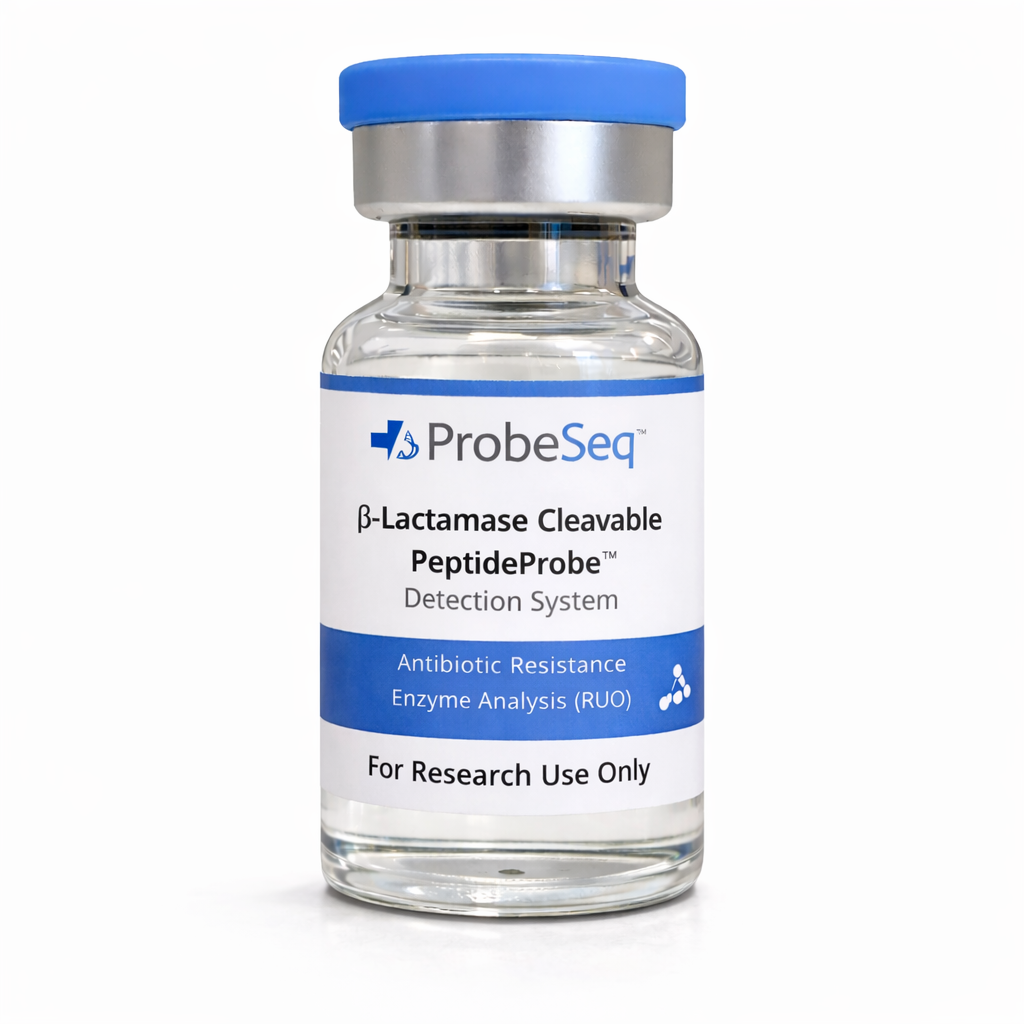
The ProbeSeq β-Lactamase Cleavable PeptideProbe™ System provides sequence-optimized peptide substrates for selective detection of β-lactamase enzymes produced by antibiotic-resistant bacteria. The system enables quantitative measurement of enzyme activity associated with resistance to β-lactam antibiotics, including penicillins, cephalosporins, and carbapenems.
This product supports development of rapid antimicrobial resistance diagnostics, pathogen detection assays, and point-of-care testing technologies. Peptide probes are engineered for high cleavage specificity, rapid enzymatic response, and stable signal generation across fluorescence, electrochemical, and microfluidic detection formats.
The system is compatible with molecular diagnostics workflows, lab-on-chip devices, and multiplex infection detection panels.
Peptide Probe Technology Advantages
Peptide cleavage probes enable direct measurement of resistance enzyme activity rather than genetic detection alone, providing functional confirmation of antibiotic resistance. Compared to antibody-based methods, peptide probes offer rapid kinetics, tunable specificity, and strong compatibility with biosensor platforms.
Molecular Detection Mechanism
The peptide probe contains a β-lactamase–sensitive cleavage sequence that is selectively hydrolyzed by target enzymes. Enzymatic cleavage generates a measurable signal change through reporter release, fluorescence activation, or electrochemical response.
The system supports real-time monitoring of antimicrobial resistance enzyme activity.
Target Design Strategy
Peptide sequences are optimized for selective recognition and cleavage by clinically relevant β-lactamase enzymes.
Design optimization prioritizes:
-
High substrate specificity for β-lactamase enzymes
-
Rapid enzymatic response kinetics
-
Minimal non-specific protease interaction
-
Stable performance in biological samples
-
Compatibility with reporter conjugation
-
Reproducible enzymatic signal generation
Custom cleavage sequences available for specific resistance classes.
Assay Workflow Integration
The PeptideProbe™ system supports workflows including sample incubation, enzymatic cleavage reaction, and signal detection.
Compatible with:
-
Fluorescence detection platforms
-
Electrochemical biosensors
-
Microfluidic diagnostic devices
-
Point-of-care infection testing systems
-
Multiplex pathogen detection assays
-
Automated molecular diagnostic workflows
System Components
-
Sequence-validated β-lactamase peptide probes
-
Recommended reaction conditions
-
Reporter compatibility guidance
-
Buffer and handling instructions
-
Signal detection protocols
Platform Compatibility
Fluorescence detection systems
Electrochemical sensing platforms
Microfluidic diagnostic cartridges
Lab-on-chip technologies
Lateral-flow detection systems
Infectious disease research workflows
Performance Characteristics
High cleavage specificity, rapid enzymatic response, low background signal, stable performance in biological samples, and scalable assay integration.
Technical Specifications
Detection target: β-lactamase enzyme activity
Probe format: Synthetic cleavable peptide substrate
Conjugation options: Fluorophore / quencher / electrochemical tag
Purity: ≥95%
Format: Lyophilized or solution
Storage: –20 °C recommended
Quality Assurance
Sequence verification, purity validation, functional cleavage testing, and manufacturing quality review performed for each batch.
Research Applications
Antimicrobial resistance diagnostics
Infectious disease detection
Rapid pathogen screening
Point-of-care assay development
Biosensor engineering
Microfluidic molecular diagnostics
Storage and Handling
Store at –20 °C in dry conditions. Avoid repeated freeze–thaw cycles.
For Research Use Only (RUO). Not for diagnostic use.