Description
Product Overview
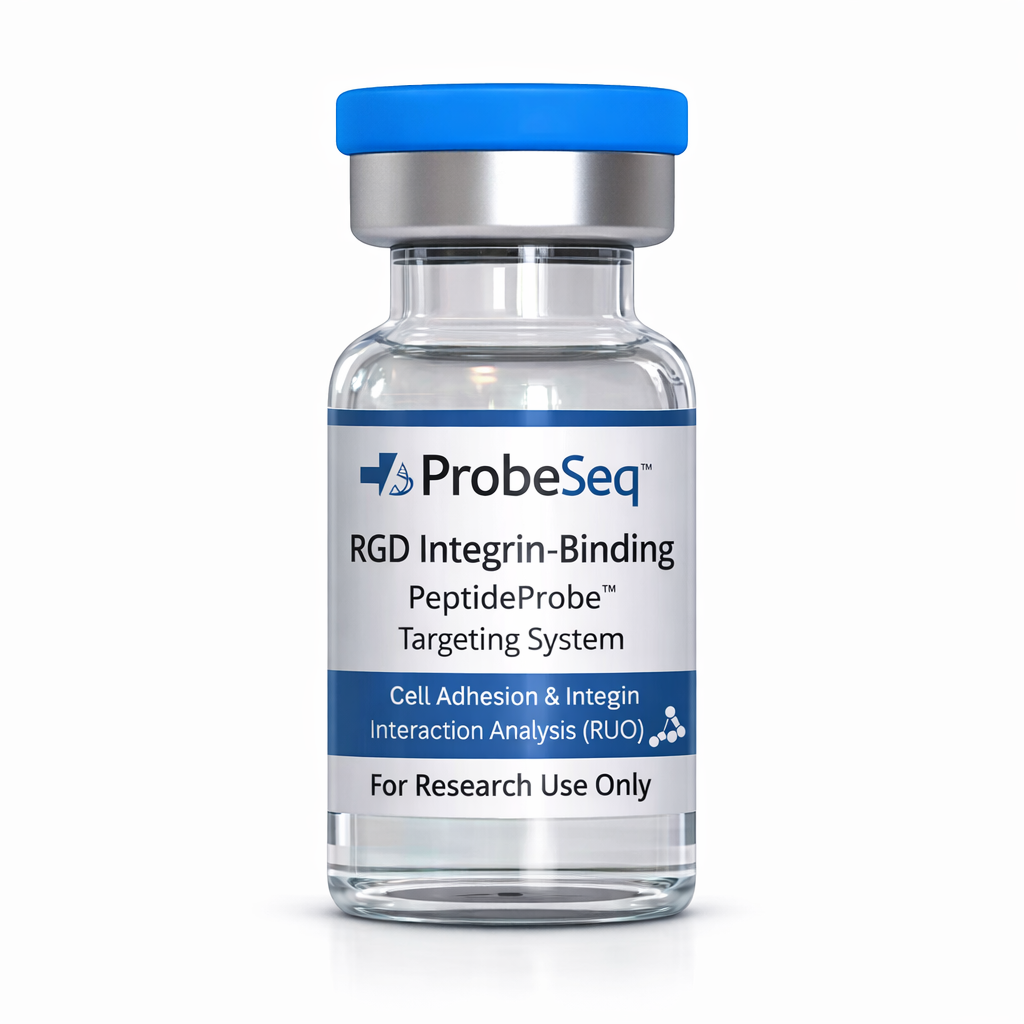
The ProbeSeq RGD PeptideProbe™ System provides sequence-optimized arginine–glycine–aspartic acid (RGD) peptide probes for selective binding to integrin receptors, including αvβ3, αvβ5, and related adhesion receptors. The system enables quantitative analysis of cell adhesion, receptor interaction dynamics, and cell–material interface behavior in live-cell and surface-based assays.
This product supports research in cell migration, extracellular matrix interactions, tumor invasion, biomaterial surface functionalization, and tissue engineering platforms. Peptide probes are engineered for high binding affinity, structural stability, and consistent receptor targeting performance.
The system is compatible with fluorescence imaging, electrochemical biosensing, surface binding assays, and microfluidic cell analysis platforms.
Peptide Probe Technology Advantages
Peptide probes provide precise receptor targeting with smaller molecular size compared to antibodies, enabling rapid binding kinetics, improved surface accessibility, and minimal steric hindrance. They offer high reproducibility, tunable affinity, and strong compatibility with biosensor and lab-on-chip technologies.
Molecular Detection Mechanism
RGD peptide sequences bind selectively to integrin receptors expressed on cell membranes. Binding enables quantitative measurement of receptor interactions, adhesion strength, and surface attachment behavior.
The system supports fluorescence labeling, electrochemical detection, and surface immobilization workflows for monitoring receptor engagement and cell–surface interaction dynamics.
Target Design Strategy
Peptide sequences are optimized for integrin recognition and stable receptor interaction.
Design optimization prioritizes:
High integrin binding specificity
Strong receptor affinity and selectivity
Minimal non-specific surface interaction
Structural stability in biological environments
Compatibility with surface immobilization
Flexible labeling and conjugation capability
Linear and cyclic RGD peptide formats available.
Assay Workflow Integration
The PeptideProbe™ system supports workflows including probe conjugation, surface functionalization, cell binding assays, and quantitative detection.
The assay integrates with:
Cell adhesion and migration assays
Biomaterial surface testing
Microfluidic cell platforms
Tissue engineering models
Fluorescence imaging systems
Electrochemical biosensors
System Components
Sequence-validated RGD peptide probes
Conjugation and labeling guidelines
Recommended assay conditions
Buffer and handling instructions
Surface functionalization protocols
Custom peptide sequences available upon request.
Platform Compatibility
Fluorescence imaging systems
Electrochemical biosensors
Microfluidic cell culture devices
Surface plasmon resonance platforms
Lab-on-chip technologies
Biomaterials research workflows
Performance Characteristics
High receptor binding specificity, rapid interaction kinetics, stable peptide structure, reproducible surface functionalization performance, and strong compatibility with biosensor platforms.
Technical Specifications
Detection target: Integrin receptors (αvβ3, αvβ5)
Probe format: Synthetic peptide
Sequence type: Linear or cyclic RGD
Conjugation options: Fluorophore / biotin / linker ready
Purity: ≥95%
Storage: –20 °C recommended
Quality Assurance
Sequence verification, purity validation, functional binding testing, and manufacturing quality review performed for each batch.
Research Applications
Cell adhesion studies
Cancer metastasis research
Biomaterials and tissue engineering
Cell migration analysis
Surface functionalization research
Microfluidic cell interaction studies
Storage and Handling
Store at –20 °C in dry conditions. Avoid repeated freeze–thaw cycles. Reconstitute in recommended buffer before use.
For Research Use Only (RUO). Not for diagnostic use.