Description
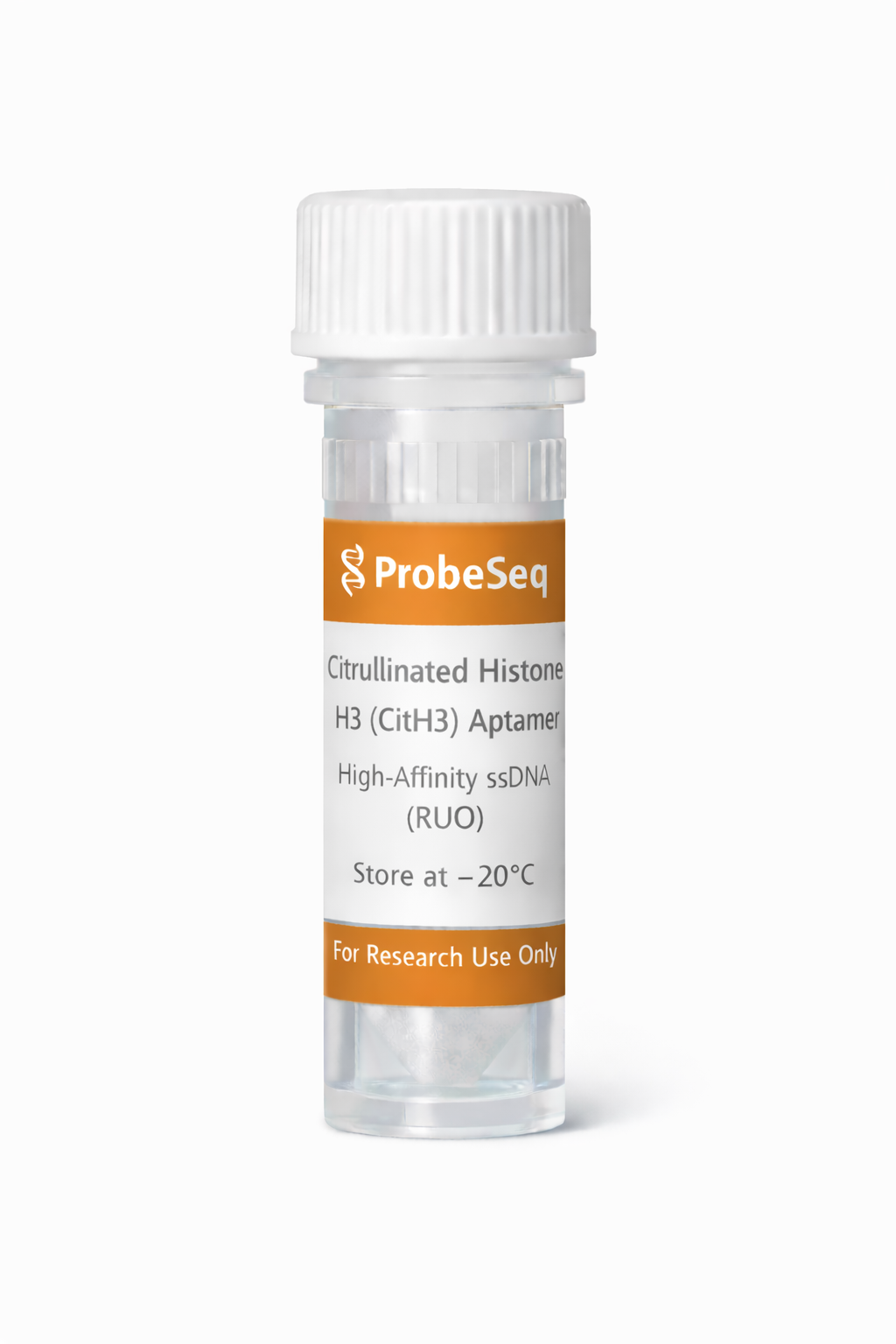
The ProbeSeq Citrullinated Histone H3 (CitH3) Aptamer is a high-affinity single-stranded DNA (ssDNA) molecular recognition element engineered for selective binding to citrullinated histone H3, a post-translationally modified histone protein generated during neutrophil extracellular trap (NET) formation. This product supports research-use biosensing and diagnostic assay development applications, including NET detection studies, inflammatory response monitoring, and immune activation research.
Citrullinated histone H3 is produced through PAD4-mediated citrullination of histone H3 during chromatin decondensation and NET release. CitH3 is widely recognized as a highly specific biomarker of NET formation and is strongly associated with sepsis, autoimmune diseases, thrombosis, cancer progression, and inflammatory disorders. Sensitive detection of CitH3 is critical for studying neutrophil activation pathways, host immune responses, and development of diagnostic technologies targeting NET-associated pathologies.
This aptamer provides selective molecular recognition of CitH3 through sequence-defined binding interactions that support high target specificity and strong binding affinity under physiologically relevant conditions. Compared with antibody-based recognition elements, aptamers provide improved chemical stability, reproducible synthesis, and compatibility with electrochemical sensing platforms, surface functionalization strategies, and microfluidic diagnostic systems.
The aptamer sequence is optimized to minimize non-specific adsorption, support stable immobilization on sensing surfaces, and maintain binding performance across diverse assay environments, enabling reliable integration into biosensor development workflows and translational research platforms.
Typical assay workflows use sample input volumes ranging from approximately 5–50 µL depending on platform configuration, surface chemistry, and detection method. The aptamer is compatible with serum, plasma, cell lysates, and buffered biological samples following appropriate assay optimization.
This product supports research programs focused on NET biology, inflammatory disease research, thrombosis studies, and biosensor engineering.
What’s Included
Each product contains:
-
High-affinity ssDNA aptamer targeting citrullinated histone H3
-
Sequence documentation for research traceability
-
Reconstitution guidelines and handling instructions
Custom sequence modifications and bulk quantities are available upon request.
Target Strategy
The aptamer is selected against citrullinated histone H3 to support:
-
High binding specificity to citrullinated histone modifications
-
Minimal cross-reactivity with non-citrullinated histones
-
Stable performance under physiological buffer conditions
-
Compatibility with biosensor surface immobilization strategies
Target selection prioritizes specificity for NET-associated protein modifications.
Product Format
Available in two configurations:
Lyophilized format
• Delivered dry for enhanced stability
• Reconstitute in nuclease-free water or preferred buffer
Solution format
• Supplied at defined stock concentration (e.g., 100 µM)
• Provided in nuclease-free water or TE buffer
Custom concentrations and modification options available upon request.
Performance Orientation
Designed for compatibility with:
-
Electrochemical biosensors
-
NET detection platforms
-
Optical and fluorescence-based detection systems
-
Surface immobilization workflows
-
Microfluidic and lab-on-chip systems
-
Point-of-care immune monitoring devices
Quality Control
Each batch undergoes:
-
Sequence verification
-
Purity confirmation (HPLC purification)
-
Concentration validation
-
Manufacturing quality control review
Certificate of Analysis (CoA) available upon request.
Applications
-
Neutrophil extracellular trap (NET) detection studies
-
Immune response and inflammation research
-
Sepsis and autoimmune disease research
-
Thrombosis and vascular inflammation studies
-
Biosensor development and validation
-
Microfluidic and point-of-care platform integration
Storage
Store at –20 °C.
Lyophilized aptamers are stable for up to 12 months. Avoid repeated freeze–thaw cycles for solution format.