Description
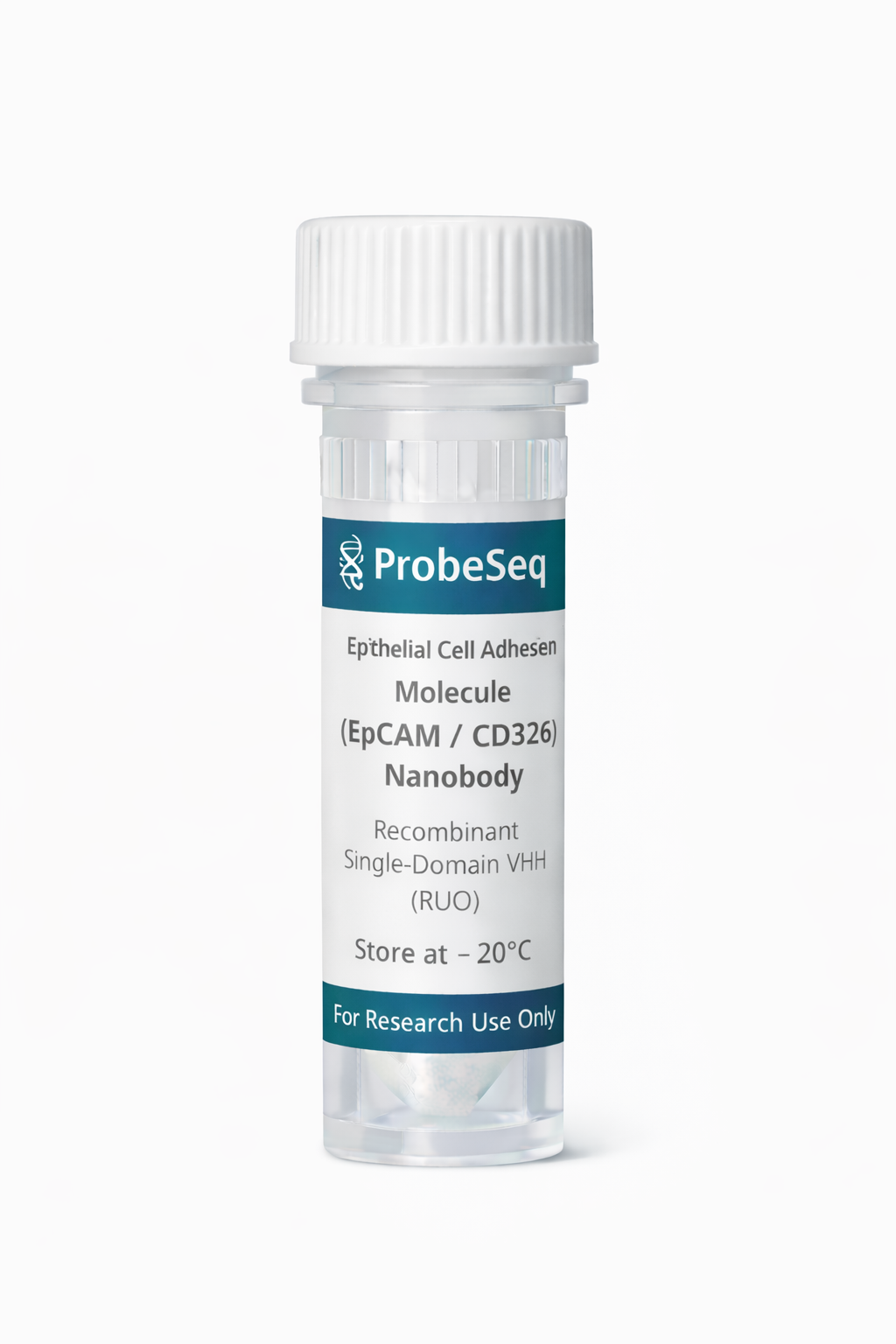
The ProbeSeq Epithelial Cell Adhesion Molecule (EpCAM / CD326) Nanobody is a recombinant single-domain antibody (VHH) engineered for high-affinity and selective binding to human EpCAM, a transmembrane glycoprotein expressed on epithelial cells and overexpressed in many carcinomas. This nanobody supports research-use diagnostic assay development, circulating tumor cell (CTC) capture, and advanced biosensor integration.
EpCAM is widely recognized as a clinically relevant tumor-associated antigen used in cancer detection, tumor profiling, and liquid biopsy applications. Elevated EpCAM expression is observed in breast, colorectal, prostate, lung, and ovarian cancers, making it a central target for cancer diagnostics and therapeutic research. Sensitive detection and capture of EpCAM-positive cells are critical for tumor progression studies, metastasis research, and development of rapid diagnostic technologies.
Derived from camelid heavy-chain antibody architecture, this nanobody consists of a single monomeric VHH domain (~15 kDa) providing strong antigen recognition, rapid binding kinetics, and high structural stability. Compared with conventional antibodies, nanobodies offer superior thermal stability, reduced steric hindrance, and efficient surface immobilization, enabling high-performance detection and cell capture in electrochemical sensors, microfluidic devices, and miniaturized diagnostic platforms.
Typical assay workflows use sample input volumes ranging from approximately 5–50 µL for soluble detection or larger volumes for cell capture applications depending on platform configuration. The nanobody is compatible with serum, plasma, whole blood samples, cell suspensions, and buffered biological samples following assay optimization.
What’s Included
Recombinant anti-EpCAM single-domain VHH nanobody
Sequence and expression documentation for research traceability
Reconstitution and handling guidelines
Custom affinity tags (His-tag, biotin, Fc fusion), labeling options, and bulk production available upon request.
Target Strategy
Engineered for high binding specificity to EpCAM extracellular domain epitopes
Minimal cross-reactivity with related cell surface proteins
Stable binding under physiological conditions
Compatible with biosensor surface functionalization and cell capture workflows
Product Format
Lyophilized format
Delivered dry for enhanced stability
Reconstitute in PBS or preferred buffer
Solution format
Supplied in PBS-based storage buffer
Typical concentration range 0.5–1 mg/mL
Tagged variants available upon request.
Performance Orientation
Electrochemical biosensors
Circulating tumor cell capture systems
Microfluidic and lab-on-chip platforms
Surface immobilization workflows
Optical and fluorescence detection platforms
Point-of-care oncology diagnostic research devices
Quality Control
Sequence confirmation
Purity validation (SDS-PAGE / chromatography)
Binding verification testing
Concentration determination
Manufacturing quality review
Certificate of Analysis (CoA) available upon request.
Applications
Circulating tumor cell detection research
Cancer biomarker and liquid biopsy studies
Tumor progression and metastasis research
Immunoassay and biosensor development
Microfluidic diagnostic platform integration
Point-of-care oncology monitoring research
Storage
Store at –20 °C for long-term storage or 4 °C for short-term use.
Lyophilized nanobody stable for up to 12 months under recommended conditions. Avoid repeated freeze–thaw cycles.